
Is American Standard a Good HVAC System? A Gainesville AC Replacement Guide
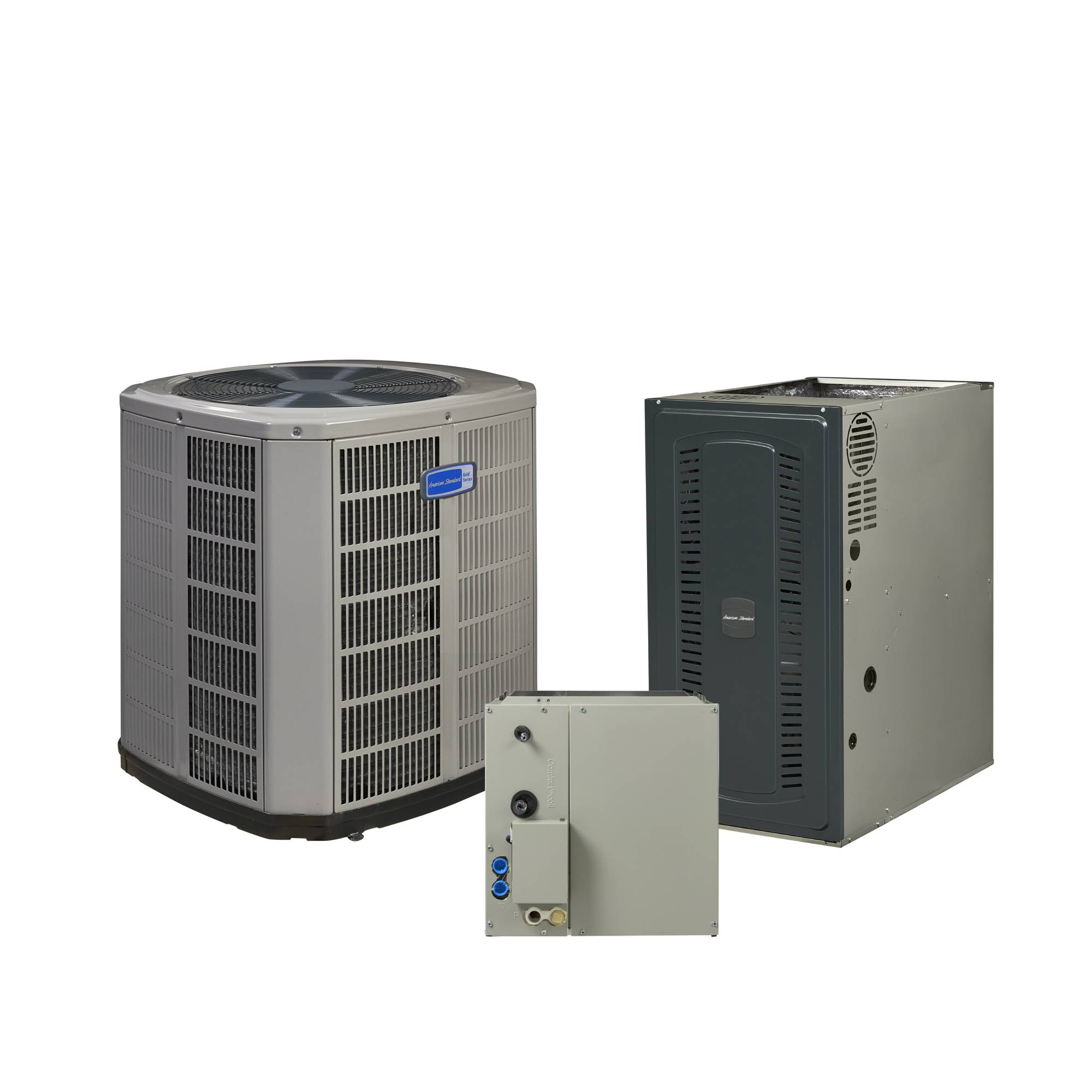
Yes — American Standard is one of the best HVAC systems you can put in a Florida home. It consistently ranks at the top of the industry for reliability, build quality, and cooling performance in extreme heat — which matters when your AC runs nine months a year in North Central Florida.
- 10 yrsregistered parts warranty
- $6k–$15kinstalled in Gainesville
- Up to 23 SEER2flagship efficiency
- Top-ratedreliability & build quality
But “is it a good brand?” is only half the question. The other half — the one that actually decides whether you’re comfortable in August — is whether it’s sized, matched, and installed correctly for your house. It’s the brand we install in our own homes, and the brand we recommend for most AC replacements in Gainesville.
We’re Andy and Alex Schwartz, the brothers behind Eagle AC. Here’s our straight-shooting take.
Why American Standard Is Built for Gainesville’s Climate
Gainesville isn’t a normal test for an air conditioner. It’s 90+ degrees from May through September, humidity that sits at “swamp” most of the year, and a cooling season that barely takes a break. Plenty of brands do fine in Ohio. Fewer hold up here.
American Standard sits at the premium end of the residential HVAC market, and four things justify that spot.
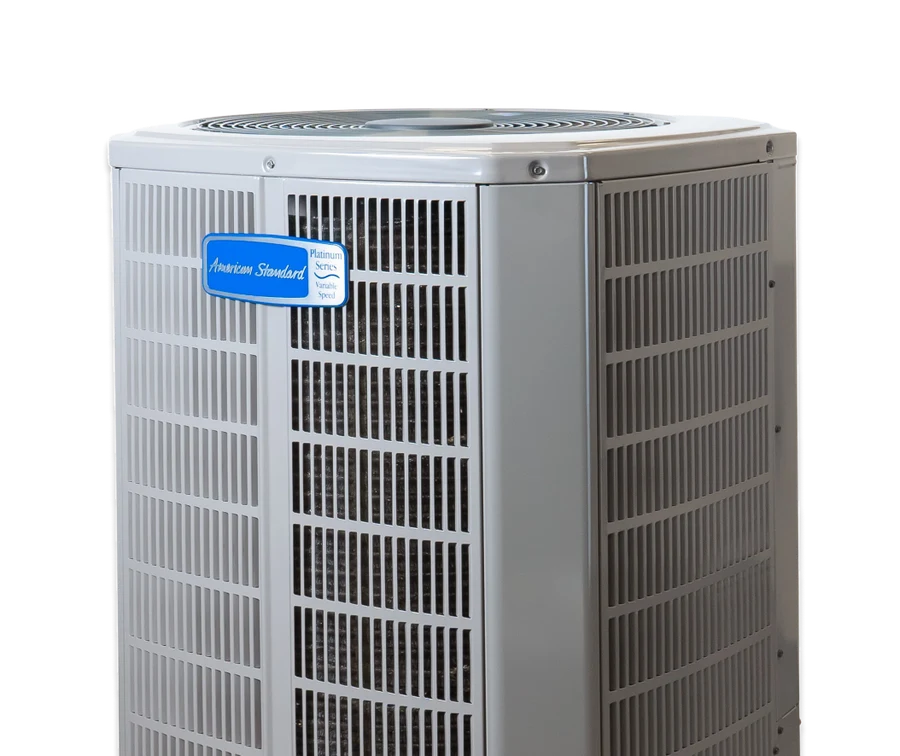
1. Built like a tank
Heavy-gauge construction and proven components that hold up year after year. In a climate where the compressor barely gets a winter break, durability isn’t a luxury — it’s the whole ballgame. Industry reliability surveys consistently put American Standard (and its sister brand Trane) among the lowest failure rates in residential HVAC.
2. Humidity control that actually works
Here’s the part that matters more in Florida than anywhere else. A cheap single-stage AC slams on, blasts cold air, hits the thermostat number, and shuts off — before it’s had time to wring the moisture out of your air. Your house reads 74 but feels like a locker room.
American Standard’s variable-speed (AccuComfort) systems run at low speed for long stretches instead of short-cycling. More moisture pulled from the air, steadier temperatures, and a unit you can barely hear from the patio. For a Gainesville home, that’s not a premium perk — it’s the difference between “cooled” and “comfortable.”
3. Cooling that doesn’t flinch in July
American Standard built its name on cooling in high heat. When it’s 96 and swampy, this equipment keeps up without straining — and a system that isn’t straining isn’t wearing itself out. That’s exactly the workload a Gainesville AC installation gets handed every summer.
4. Sold through certified dealers — which protects you
American Standard doesn’t sell through big-box stores. It’s sold and installed through certified independent dealers — like us — because the manufacturer knows the install determines whether the equipment performs. When you call Eagle AC, a Schwartz brother (or someone we personally trained) does the work. No subcontractors, no shortcuts.
Silver vs. Gold vs. Platinum: Which Series Fits Your Home?
This is where most homeowners get lost, so here’s the plain-English version. American Standard’s residential lineup comes in three tiers:
| Series | Efficiency | Compressor | Best For |
|---|---|---|---|
| Silver (Silver 14, 15) | ~14.3–17 SEER2 | Single-stage | Budget-conscious replacements, rentals, smaller homes |
| Gold (Gold 16, 17) | ~16–17 SEER2 | Two-stage / multi-speed | The sweet spot: comfort + efficiency without the flagship price |
| Platinum (Platinum 18, 20) | ~18–23 SEER2 | Variable-speed AccuComfort | Maximum humidity control, quietest operation, lowest power bills |
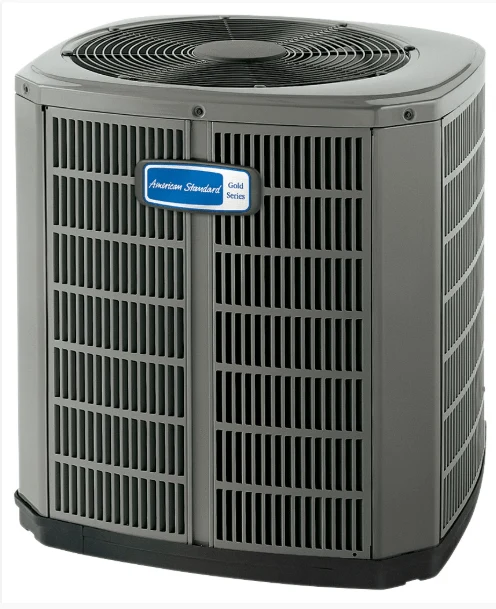
Our honest take for Gainesville homes: Silver is a solid workhorse — if the budget is tight, a properly installed Silver beats a badly installed anything. Gold is where most of our customers land: two-stage cooling means noticeably better humidity control for a moderate step up. Platinum is the one you buy when you want the house to feel like a hotel lobby year-round — and with GRU electric rates, the efficiency gap pays you back every month.
Florida’s minimum efficiency standard is 14.3 SEER2 for split systems — so even the entry-level Silver 14 meets code, and everything above it beats it.
Not sure which tier your home needs? That’s literally what our free in-home estimate is for. Square footage, insulation, duct condition, and window exposure change the answer — schedule a visit and we’ll do the math in front of you.
The Honest Trade-Offs
We’d rather tell you the downsides up front than have you find out later. There are three.
It costs more up front
American Standard is priced alongside Trane and Carrier, so equipment and installation run higher than a budget or mid-tier brand. You’re paying for build quality and a longer service life — but the initial number is bigger, and we won’t pretend otherwise. Financing from 12 to 120 months takes most of the sting out.
Some parts are proprietary
Because American Standard makes many of its own components, certain replacement parts are exclusive to the brand. If a specific part isn’t stocked locally, a repair can occasionally take a little longer or cost a bit more. Keeping up with preventative maintenance is the easiest way to avoid those surprises — and it’s what keeps the warranty airtight.
Known more for cooling than heating
American Standard built its name on cooling — the strength you’ll lean on most in Florida anyway. Their heat pumps handle our mild winters just fine; it’s only in truly frigid northern climates that the heating side is less celebrated. For North Central Florida? Non-issue.
What Does an American Standard AC Replacement Cost in Gainesville, FL?
Here’s the ballpark for a single-system replacement, installed, in the Gainesville area in 2026:
Reliable comfort on a budget. Same build quality, simpler controls.
The sweet spot: real humidity control without the flagship price.
Whisper-quiet, hotel-lobby comfort, lowest power bills.
Why prices moved in 2025–2026: the refrigerant change
The industry just switched from R-410A to R-454B, a lower-global-warming-potential refrigerant now required in new residential systems. Two things that means for you: new systems cost more than they did two years ago (across every brand, not just American Standard), and keeping an old R-410A system alive is getting more expensive as supply tightens. If your unit is 12+ years old and facing a major repair, the math increasingly favors replacement.
What actually moves your quote up or down
Tonnage, ductwork condition, air handler location (a closet swap is easier than a crawl-in attic), electrical upgrades, and efficiency tier. Every home is different — which is why the only number that matters is the written, flat-rate quote we hand you before any work starts. No surprises, no overtime games.
One honest note on incentives: the federal energy-efficiency tax credit (Section 25C) expired December 31, 2025 — so don’t let anyone dangle “up to $2,000 back from the IRS” on a 2026 install. If a current GRU or manufacturer rebate applies to your job, we’ll flag it in your quote. We won’t sell you a system with incentive money that no longer exists.
7 Signs It’s Time for AC Replacement — Not Another Repair
Wondering whether to nurse the old unit through one more summer? Here’s our shop’s honest checklist:
- It’s 12–15+ years old. That’s the design life, and Florida summers age equipment fast.
- The repair quote is more than a third of replacement cost. The classic rule, and it holds.
- It uses R-410A (or older R-22) and needs refrigerant work. That’s money thrown at borrowed time.
- Your summer power bills keep climbing. A tired 10 SEER unit costs serious money against a modern 16–20 SEER2 system.
- Some rooms are cold, some are hot. The system (or ductwork) no longer matches the house.
- It can’t hold humidity down. If the house feels sticky at 74°, it’s oversized, undersized, or dying.
- You’re calling for repairs every year. Annual repairs are a payment plan on a system you should have replaced.
Three or more of those? Get a replacement quote before it dies on a Friday afternoon in July — and if you want a fast read on what a repair would run first, try our free AC repair estimator.
Repair or Replace? We’ll Tell You the Truth Either Way
If a repair is the smarter money, we’ll tell you to repair it. We’re not in the business of selling $10,000 systems to people who need a $400 capacitor. Our AC repair team fixes what can be fixed; our install team replaces what can’t. Same phone number, no commission games.
American Standard AC Installation in Gainesville — Done Right, by the Owners
A premium system is only worth the money when it’s sized and installed right — and that’s the part we obsess over. As a family-owned company installing American Standard across Gainesville and all 12 cities we serve, here’s what an AC installation with Eagle AC looks like:
- A real load calculation — not a guess based on “what was there before”
- A written, flat-rate quote before any work begins
- Installation by a Schwartz brother or someone we personally trained
- No overtime fees — day, night, or weekend
- Registered 10-year manufacturer parts warranty + our written workmanship guarantee
Thinking About an American Standard System?
Get an honest recommendation and a written flat-rate quote — free. You’ll get a real Schwartz brother on the line, usually the same day.
Schedule Free Estimate Call (352) 538-1533 Family-owned · Licensed CAC 1822449 · Serving Gainesville + 11 surrounding cities