AC Replacement in Gainesville: Choosing the Right System
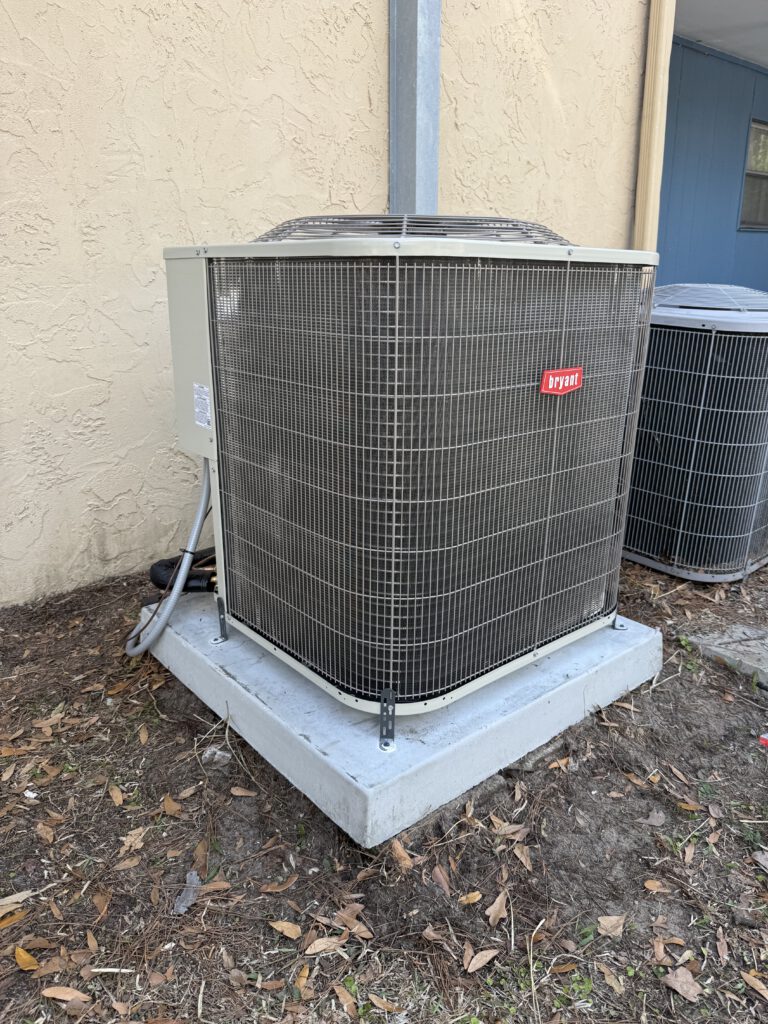
Your home feels sticky by midafternoon, even though the AC keeps running. If you’re researching AC replacement in Gainesville, FL, start with the condition of your system, your ductwork, and your comfort needs, not just the price of a new outdoor unit.
Your AC is struggling: should you fix it or replace it?
If your AC has stopped cooling, call Eagle AC to confirm same-day repair availability. A diagnosis can separate a fixable problem from a failure that makes replacement worth considering.
For a system that still runs, compare the proposed repair cost with your breakdown history, remaining warranty coverage, and equipment condition. A covered component repair is a different decision from another expensive repair on a deteriorating system.
Your utility bills add context, but a higher bill alone doesn’t prove your AC needs replacing. Hotter weather, duct leaks, restricted airflow, and thermostat changes can also increase energy use.
Use the $5,000 rule as a starting point, not a verdict
Multiply your system’s age by the proposed repair cost. A result above $5,000 suggests comparing replacement options. For example, 12 years × $450 = $5,400.
That’s a screening tool, not a verdict. The calculation leaves out warranty coverage, past repairs, and whether the rest of your equipment is healthy. Understanding where this shortcut falls short can keep a simple formula from driving an expensive decision.
A commonly cited service-life range is 15-20 years, but actual life varies with maintenance, installation, and operating conditions. Gainesville’s long cooling season makes condition worth checking carefully. Age alone isn’t a reason to replace working equipment.
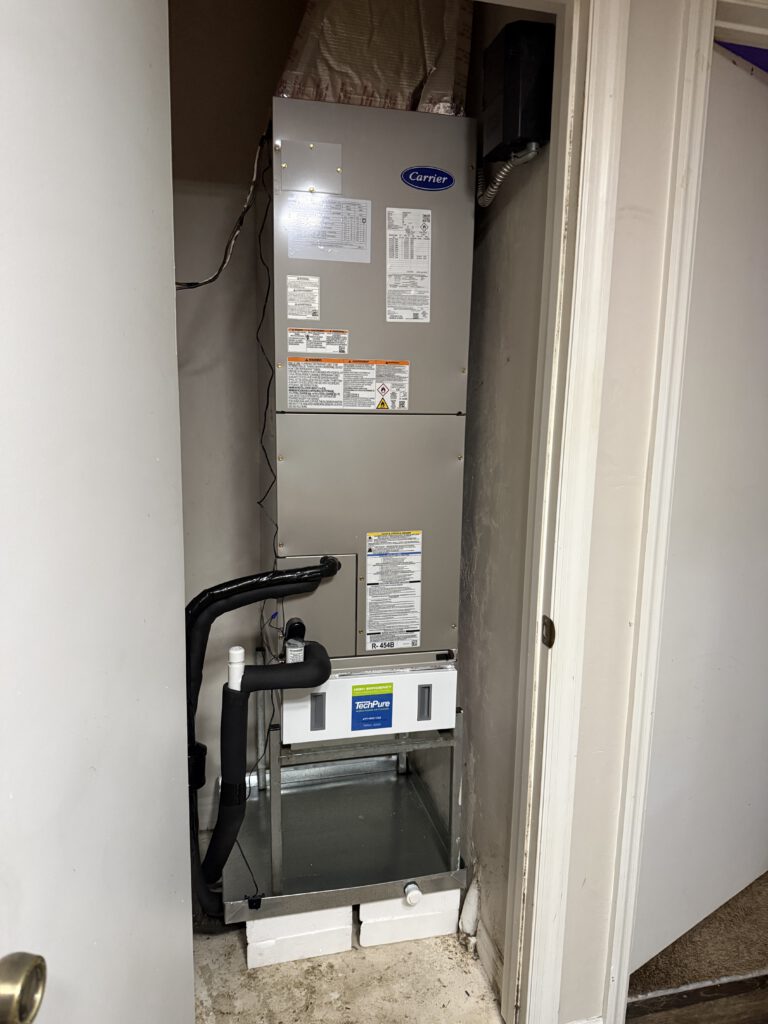
Choose the right system for your gainesville home
Start with your existing ducts, heating setup, room layout, and budget. Heat pumps are the most common local setup, but your replacement should fit your property rather than follow a favorite brand.
An older Gainesville home with aging attic ducts needs a different evaluation from a newer builder-grade subdivision home in Newberry. A converted garage in Alachua or an addition in High Springs may need its own solution instead of more capacity for the entire house.
Central AC: a practical option when your ducts are in good shape
Central AC distributes cooled air through your ducts and relies on a separate heat source, such as a furnace or electric heating equipment. It can make sense when your ducts work well and your existing heating arrangement still fits your needs.
A matched indoor-and-outdoor replacement helps establish compatible capacity, controls, and rated efficiency. Replacing only the outdoor unit deserves a compatibility check covering the indoor coil, refrigerant, efficiency documentation, and warranty terms. Don’t assume a new outdoor unit will work properly with any existing air handler.
Heat pumps: cooling and heating from one system
A heat pump cools your home much like an AC. During cooler weather, it reverses operation to move heat indoors.
That arrangement suits North Central Florida’s long summers and generally short, mild winters. Your proposal should still explain backup heat for colder mornings, including whether existing electric heat strips can remain or need replacement.
Compare complete installed proposals, not equipment labels alone. A heat pump quote and an AC quote may include different heating equipment, electrical work, and controls.
Ductless mini-splits: a fit for additions and hard-to-cool rooms
Ductless equipment can serve homes without ducts, converted garages, additions, and detached workspaces. Separate indoor units provide room-by-room control without extending attic ductwork.
Placement matters. Your indoor unit needs suitable airflow, an acceptable appearance, and a dependable condensate drain route. Serving one room is a different project from conditioning several zones, which adds indoor equipment, refrigerant piping, and installation work.
For a small office or commercial space, confirm occupancy, ventilation, electrical requirements, and operating hours before choosing equipment. Residential sizing assumptions don’t automatically fit a busy storefront.
Get your system sized for your home, not just your square footage
A bigger AC is not automatically a better AC. Oversized equipment can cool the air quickly, shut off, and leave too much moisture behind. Your thermostat reaches its setting, but your rooms still feel clammy.
Request a room-by-room load calculation, commonly called Manual J for residential work. It estimates cooling needs using your home’s construction, windows, insulation, orientation, and other conditions rather than square footage alone.
Include changes since your current system was installed. New windows, added insulation, an enclosed porch, or a room addition can change the required capacity. Attic conditions and air leakage matter, too.
Your contractor should also inspect duct sizing, leaks, insulation, supply registers, return-air capacity, and airflow. Installing new equipment on restrictive ducts is like fitting a stronger pump to a pinched hose: the underlying problem remains. For commercial property, request a load calculation appropriate to occupancy, lighting, equipment, and ventilation needs.
Compare efficiency with everyday comfort
SEER2 is a standardized cooling-efficiency rating. Higher numbers indicate greater rated efficiency, not a guaranteed reduction in your electric bill.
Correct sizing, sound ducts, proper refrigerant charge, and humidity control matter alongside the rating. A high-efficiency system connected to leaking attic ducts won’t deliver its full potential. Ask for the efficiency of the exact matched equipment combination, not the highest rating available within a product line.
The Department of Energy’s regional cost comparison illustrates the trade-off: paying more for efficiency makes financial sense when expected energy savings exceed the price premium. Its standardized assumptions aren’t a personal savings forecast or a statement of current Florida installation minimums.
Decide whether variable-speed comfort is worth the extra cost
Single-stage equipment operates at one cooling output whenever it runs. It generally has the lowest initial equipment cost, but temperature swings and noticeable starts and stops can be more pronounced.
Two-stage equipment offers lower and higher output. Variable-speed equipment adjusts across a wider operating range. When properly sized and configured, longer cycles can provide steadier temperatures, quieter operation, and better moisture removal.
That comfort can be valuable during a humid High Springs afternoon, even when the temperature isn’t at its summer peak. But premium equipment isn’t a substitute for fixing duct or airflow problems.
Request an energy-cost comparison using your electricity rate, expected usage, and complete installed prices. Also consider what affects equipment longevity locally when evaluating a long payback period. Don’t pay a large premium based solely on promised percentage savings.
What does AC replacement cost in gainesville, FL?
There isn’t a reliable Florida average or Gainesville replacement price in the supplied research. A published national HVAC range of $5,000-$12,000 provides broad planning context, not a local quote. Some projects cost more.
Your installed price depends on system type, capacity, efficiency, duct repairs, electrical changes, permits, drainage, and installation access. A straightforward replacement using suitable existing infrastructure differs from a project requiring a larger return, damaged-duct replacement, or difficult attic work.
At the lower-budget end, prioritize correct sizing and complete installation over premium controls. A middle-budget proposal may add staged operation and targeted duct improvements. A higher-budget project may include variable-speed comfort or multiple ductless zones, but extra features should solve a real problem.
Budgeting for AC replacement in a 2,000-Square-Foot home
Square footage alone cannot establish a dependable equipment size or replacement price. Two 2,000-square-foot homes in Gainesville can have very different cooling loads because of windows, shade, ceiling height, insulation, and air leakage.
Your estimate should separate equipment, labor, ductwork, electrical changes, condensate drainage, permits, disposal, and optional upgrades. Clear allowances matter when a final cost depends on conditions discovered during installation.
Compare complete installed totals. A low equipment-only number leaves too much unknown.
If you’re weighing a major repair against replacement, comparing the repair with replacement cost adds useful context. Just make sure both figures cover a clearly defined scope rather than comparing a complete repair with an incomplete installation quote.
Check rebates, financing, and long-term value
Don’t assume a Florida HVAC rebate program is currently open or that every efficient system qualifies. Before purchase, check your electric utility, applicable state programs, and any currently available federal incentives.
Verify funding availability, eligibility, exact qualifying models, application deadlines, and any preapproval requirement. Use current official program information, not an old incentive amount copied into a sales brochure. Your electric provider may differ between Gainesville and surrounding communities.
For financing, compare APR, fees, promotional conditions, and total repayment. A manageable monthly payment can still produce a much higher total cost. Consider financing expense alongside estimated energy use, maintenance, and expected repair exposure.
Compare contractors and avoid expensive installation shortcuts
A useful proposal explains what will happen in your home, not just which equipment will arrive. Compare written estimates on the same scope and verify licensing and insurance independently.
Use this checklist when reviewing bids:
- Active Florida HVAC license
- Current insurance documentation
- Documented load calculation
- Exact indoor and outdoor models
- Matched-system efficiency documentation
- Defined ductwork scope
- Permit responsibility
- Written equipment warranty terms
- Written labor coverage
- Documented startup testing
Refrigerant requirements also affect compatibility. Your contractor should explain the proposed refrigerant, equipment pairing, and any installation or safety requirements. New equipment requirements don’t automatically mean an older, functioning system needs replacement.
Be cautious about a bid based only on your old unit’s size. Vague ductwork allowances, missing model numbers, and pressure to sign immediately make comparison harder, not easier.
Before installation, confirm how your floors and work areas will be protected, how old equipment will be removed, and how long cooling will be interrupted. Outdoor placement should account for service access and drainage. On properties with a well and septic system, identify nearby infrastructure before equipment placement or condensate routing.
At startup, request confirmation of airflow, refrigerant charge, condensate drainage, thermostat operation, and heating operation where applicable. Ask for documented results rather than accepting “it’s blowing cold” as the entire commissioning process.
For a small business, put operating-hour scheduling, roof or mechanical-room access, and expected downtime in writing. Include responsibility for coordinating access with tenants or building management.
Take the next step toward reliable cooling
If your AC stops cooling, call Eagle AC to confirm same-day repair availability. If repairs keep adding up, request a free replacement estimate with equipment choices and installation scope clearly explained.
For ongoing care, ask about the Eagle Care Plan maintenance plan. Review visit frequency, covered inspection and cleaning tasks, priority-service terms, and exclusions before signing up. Maintenance supports performance, but it doesn’t eliminate every future repair.
Frequently asked questions
Can you replace only the outdoor AC unit?
Sometimes, but only after checking compatibility with your indoor coil, air handler, refrigerant, and controls. Request written confirmation of the matched-system efficiency and applicable warranty terms. An outdoor-only replacement isn’t automatically the least expensive choice over time.
Will a new AC fix high indoor humidity?
A correctly sized and configured system can improve moisture removal, especially with staged or variable-speed operation. Persistent humidity may also involve duct leaks, outside-air infiltration, drainage problems, or a separate dehumidification need. Replacement alone doesn’t guarantee a dry, comfortable home.
Should you replace a working system in a newer subdivision?
Not simply because it’s builder-grade. Check remaining warranty coverage, repair cost, airflow, and installation condition first. A repair or duct correction may address the problem without replacing otherwise serviceable equipment.
How long will your home be without cooling during replacement?
A straightforward replacement may be completed within a day, but duct changes, electrical work, access problems, and inspections can extend the schedule. Get a project-specific timeline before installation and plan around the expected cooling interruption.
Does a replacement estimate require an in-home visit?
An in-home assessment gives your contractor the information needed for a dependable proposal. Equipment condition, ductwork, electrical service, drainage, access, and cooling-load measurements can’t be fully verified from square footage or a photograph.
Gather your latest electric bill and repair invoice before your estimate appointment. Call Eagle AC or book service online to arrange repair, request a free replacement estimate, or ask about the Eagle Care Plan.