
When to Replace a Heat Pump (Signs It’s Time to Upgrade)
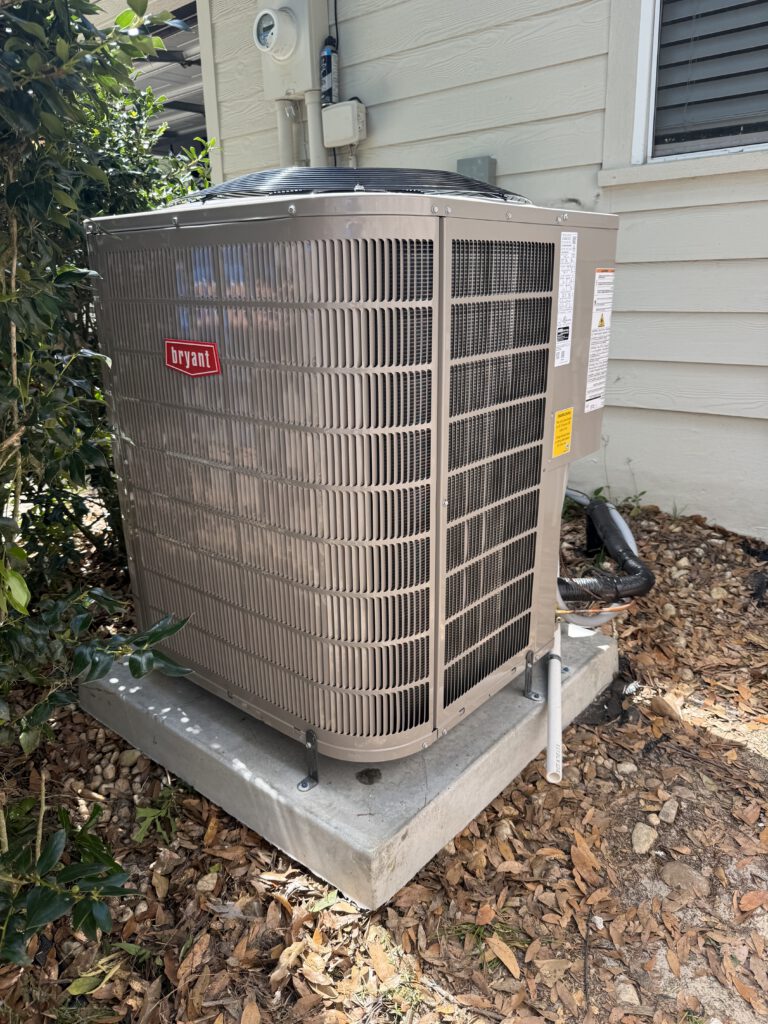
Your heat pump runs all afternoon, but your Gainesville home still feels sticky. Deciding when to replace a heat pump comes down to declining reliability, comfort, and efficiency outweighing another repair, not simply reaching a birthday.
1. Your heat pump is over 10 years old, and showing its age
ENERGY STAR recommends considering replacement after 10 years, but age is not an expiration date. Pair that number with repair history and performance.
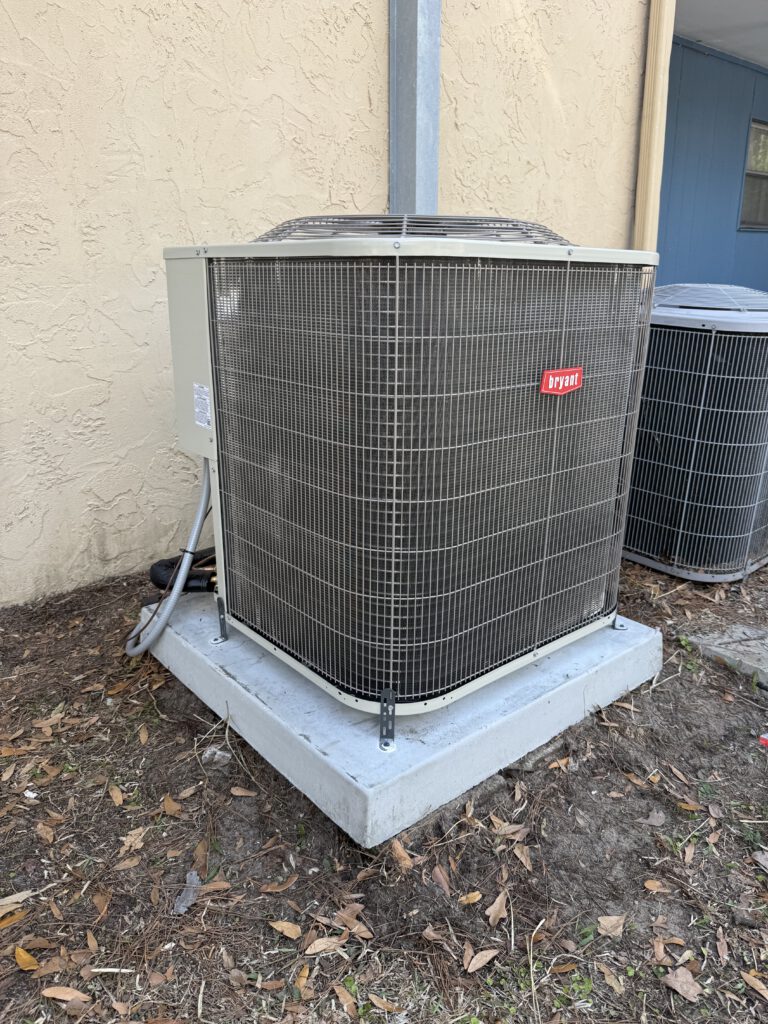
Check installation invoices and warranty records first. Without those, photograph the outdoor unit’s model and serial label so a technician can identify its manufacturing date. Installation may have happened later.
Across Gainesville and Alachua, heat pumps are common in older homes and newer builder-grade subdivisions. Florida’s long cooling season makes maintenance history worth checking.
2. Your repairs are becoming frequent or expensive
A failed capacitor in a newer subdivision home can justify a straightforward repair. Repeated breakdowns or a costly compressor failure deserve a replacement comparison. Check parts and labor coverage separately before paying, and review what drives repair costs.
Older refrigerants can make leak repairs more expensive as availability changes. A refrigerant phaseout does not require replacing a working heat pump.
With ductless multi-zone equipment, one failed indoor head does not automatically condemn the shared outdoor unit. Compatibility determines whether a partial replacement is possible.
3. Your electricity use keeps climbing without a clear reason
Compare kilowatt-hours, not just bill totals, across periods with similar weather and occupancy. Higher utility rates or a lower thermostat setting can explain a bigger bill without equipment failure.
During Florida’s short, mild winters, auxiliary heat, your backup electric heating, can increase consumption. If backup heat stays on unexpectedly, check why it keeps running.
Have a dirty filter, restricted airflow, and overdue maintenance addressed first. Persistently high use after those checks strengthens the replacement case. A new system’s energy savings are not guaranteed.
4. Your home still feels uncomfortable after basic fixes
Weak airflow, uneven temperatures, lingering humidity, or trouble reaching your thermostat setting on a humid Newberry afternoon deserve diagnosis. Duct leaks, insulation gaps, thermostat faults, and incorrect sizing can mimic worn-out equipment.
A brief winter defrost cycle, sometimes with outdoor steam, is normal. Persistent icing or poor heating needs service.
The “20-degree rule” is not a replacement test. Neither a fixed indoor-to-outdoor temperature gap nor a particular outdoor temperature determines whether your system is finished. Even cooling supply-to-return air measurements need context, including humidity, airflow, and operating conditions.
Replacing equipment without finding the cause can leave you with the same uncomfortable rooms.
5. Your system makes new noises or gives off troubling odors
Ordinary humming differs from new grinding or banging. Likewise, a brief dusty smell during the first heating cycle differs from persistent unusual odors.
For smoke, sparking, or a burning electrical smell, shut the system off if safe. Leave and seek emergency help for an active fire.
Arrange prompt diagnosis for troubling sounds or odors. A service assessment, not the noise alone, determines whether repair or replacement makes sense.
6. Another repair no longer makes financial sense
The $5,000 rule multiplies equipment age by repair cost. A result above $5,000 is a reason to compare choices, not a verdict.
Consider this explicitly hypothetical example: a $1,800 repair buys an estimated two more years. Add $600 in expected repairs and $300 annually in avoidable energy costs. That two-year bridge totals $3,000, compared with a hypothetical $12,000 replacement quote.
The comparison does not prove replacement pays for itself. Repair buys time for less money upfront; replacement may offer better comfort and warranty protection. Remaining equipment life and future savings remain uncertain.
Use a fuller financial comparison rather than letting one formula decide.
For a 2,000-square-foot house, square footage alone cannot establish installation cost. Equipment selection, calculated heating and cooling needs, ductwork, electrical work, and installation complexity determine your local quote.
7. Your warning signs add up, so plan your upgrade before an outage
An older unit with repeated failures, worsening consumption, and poor comfort deserves a replacement estimate. Several persistent signs carry more weight than age alone.
Your estimate should address a proper load calculation, meaning a room-by-room assessment of heating and cooling needs. Include humidity control, ductwork, electrical requirements, and compatible indoor and outdoor equipment. In a damp High Springs home, simply installing a larger unit can make moisture control worse.
Check current incentives and eligibility rather than counting on advertised savings. Plan ahead when possible, but request prompt service during a summer or winter failure instead of waiting for a better season. For your small business, discuss installation around operating hours.
Gather your latest repair quote and electric bill before calling for a diagnosis. That gives your repair-versus-replacement conversation a useful starting point.
Frequently asked questions
Can you replace a heat pump in winter?
Yes. A winter failure warrants prompt service. Scheduling a planned upgrade before an outage gives you more time to compare equipment and estimates.
Should you replace both indoor and outdoor units?
Often, matched equipment is necessary for compatibility and rated performance. Have the proposed combination verified rather than assuming your existing indoor unit can stay.
Does running all afternoon mean your heat pump is failing?
Not necessarily. Long cycles can be normal during Florida heat, especially with variable-speed equipment. Declining comfort or unusual electricity use deserves diagnosis.
Can maintenance delay replacement?
Maintenance can correct airflow and drainage problems and catch wear early. It cannot reverse every aging component, but it can help you avoid replacing repairable equipment.
Call Eagle AC for same-day repair scheduling when available or a free replacement estimate in Gainesville, Newberry, High Springs, or Alachua. If repair makes sense, ask about the Eagle Care Plan maintenance plan. Book at eagleacfl.com/schedule-service/.