
Repair or Replace Your Heat Pump? A Practical Way to Decide
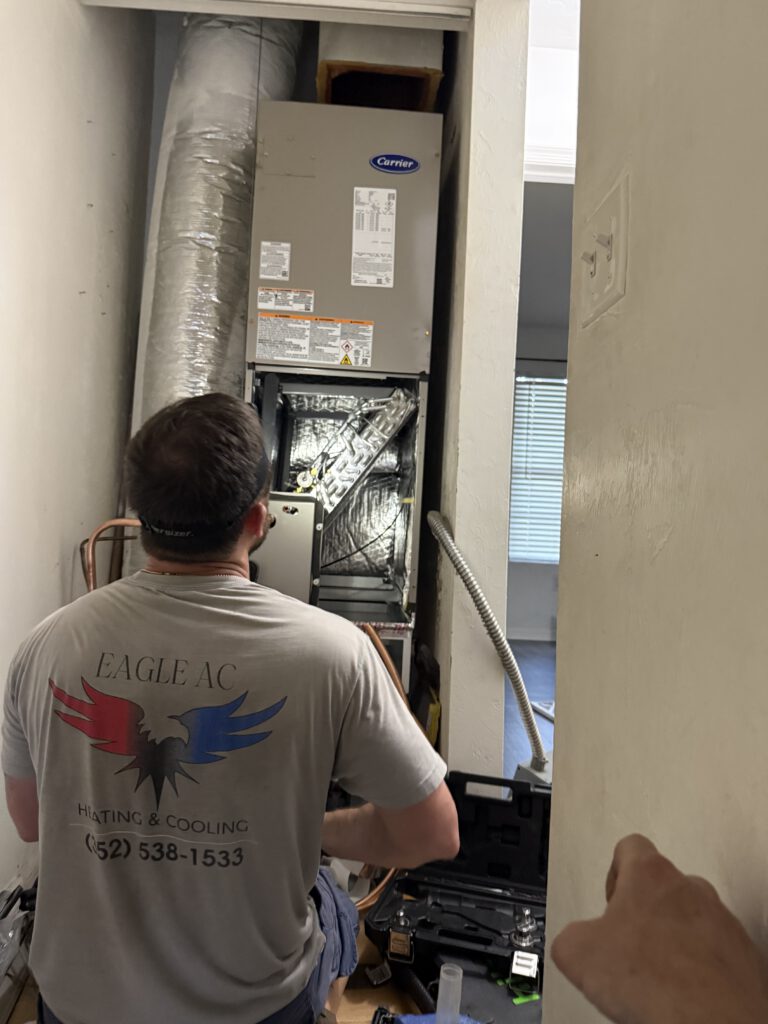
Your Gainesville home feels sticky even though your heat pump ran all afternoon. Deciding whether to repair or replace your heat pump starts with finding the cause, then comparing the full cost of each option.
Repair or replace your heat pump? start with What’s changed
A small, isolated failure usually favors repair. A major failure plus repeated breakdowns deserves a replacement comparison. Age alone does not decide the answer.
Rising bills, uneven temperatures, unusual noises, and repeat service calls deserve attention, but none automatically means your equipment is finished. Heat pumps commonly provide heating and cooling across Gainesville, Newberry, High Springs, and Alachua. Florida’s long cooling seasons demand more runtime than the short, mild winters suggest.
Heat pumps often last around 15-20 years, though maintenance and operating conditions affect that range. Understanding how Florida conditions affect equipment life helps put your system’s age in context. A limited fault in a newer builder-grade subdivision calls for a different decision than repeated major failures in an older home.
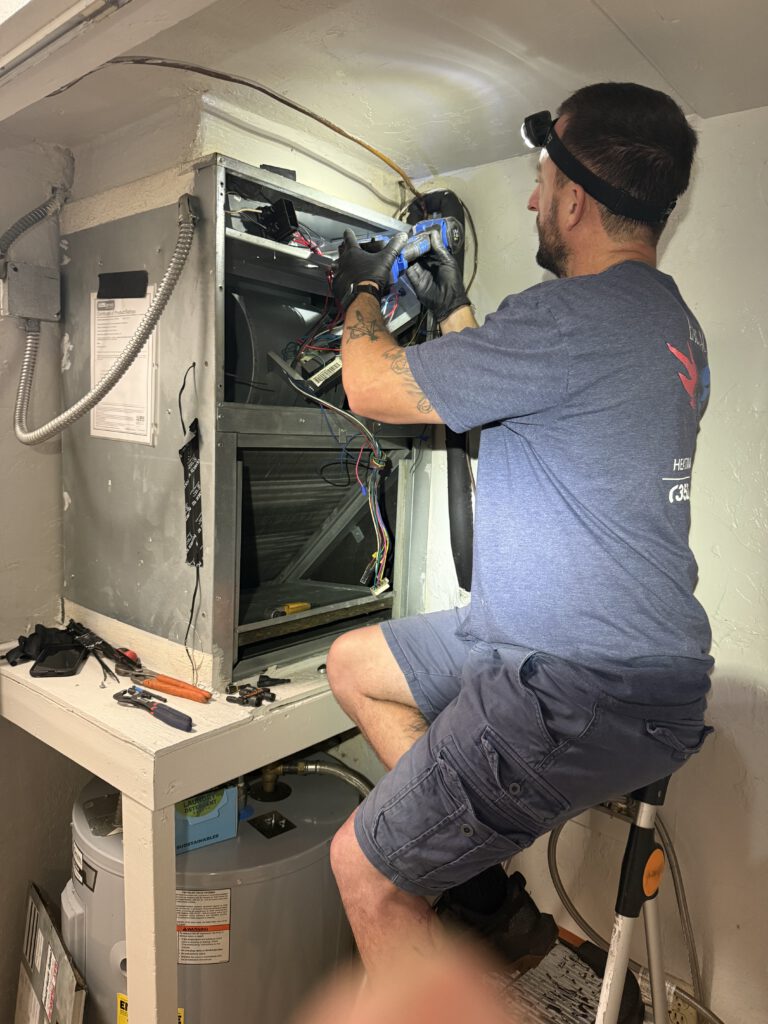
Get a clear diagnosis before you spend
Poor cooling can come from restricted airflow, duct leaks, thermostat settings, or drainage trouble, not worn-out equipment. Check your filter and thermostat first. Leave electrical and refrigerant work to a licensed technician.
For burning smells or repeated breaker trips, turn the system off and request service. Do not keep resetting the breaker.
Find out whether your repair is small or system-wide
Request the failed component, underlying cause, and itemized repair scope. Published national repair estimates include $100-$400 for a capacitor, $200-$1,500 for a refrigerant-leak repair, and $900-$2,900 for a compressor. These are planning ranges, not Eagle AC quotes; local labor and included work vary.
For compressor failures or coil leaks, request confirmation of the diagnosis, the leak location where relevant, and what prevents another failure. Adding refrigerant does not fix a leak. Reviewing what goes into a repair bill helps you compare the complete scope.
Check your warranty before comparing prices
Gather your model number, serial number, installation date, and warranty paperwork. Verify parts and labor coverage, registration requirements, and exclusions. Compare your actual out-of-pocket cost, including refrigerant and service charges, not the component’s list price.
Compare repair and replacement over the same timeframe
Put these details side by side before deciding:
- Net repair quote
- Likely remaining service life
- Previous repair history
- Installed replacement price
- Expected operating costs
- Your reliability needs
Repair can buy useful time when your budget is tight. Replacement can reduce disruption when dependable cooling matters for your household, rental, or small business.
Published replacement planning figures run roughly $6,000-$15,000 for a ducted air-source system. Those are broad estimates, not Gainesville-area quotes. Installation requirements can change the price substantially.
Run the numbers and use the $5,000 rule carefully
Multiply your system’s age by your repair quote. A result above $5,000 prompts a replacement comparison, not automatic replacement. Warranty coverage and good overall condition can overturn that shortcut.
Hypothetical three-year comparison: A $1,800 repair plus $1,500 annually in operating costs totals $6,300. A $10,000 replacement plus $1,200 annually totals $13,600.
That assumes your repaired system lasts the full three years, no additional repairs occur, and operating-cost estimates hold. Replacement retains useful life beyond that period. Another major failure could erase repair’s short-term advantage. This is not a lifetime-cost calculation or a savings promise.
Use the numbers alongside signs that an upgrade deserves consideration, especially recurring failures and declining comfort.
If replacement makes sense, compare the whole job
A comparable ducted replacement keeps the project simpler when your existing ducts are sound. A variable-speed option usually costs more upfront but can provide steadier temperatures and better humidity control. Ductless equipment can suit additions or spaces without practical duct access.
For a lower-budget project, prioritize correct sizing and installation over premium features. With more room in your budget, compare the added comfort of variable-speed operation against the added price.
SEER2 measures cooling efficiency; HSPF2 measures heating efficiency. Both matter, but neither rating fixes poor sizing.
Request a Manual J calculation, a room-by-room assessment of heating and cooling needs. Do not automatically buy the same size or something larger. In humid High Springs, oversized equipment can cool quickly yet stop before removing enough moisture.
Ask for matching equipment and matching quote details
Compare indoor and outdoor equipment, controls, labor, permits, disposal, refrigerant lines, duct or electrical changes, warranties, and startup performance checks. A lower price may simply exclude necessary work.
Replacing only the outdoor unit requires verified equipment and refrigerant compatibility. An older refrigerant does not automatically require full replacement, although availability and service costs matter.
A failed ductless multi-zone head or ground-source component may not require replacing everything. Get a component-specific assessment.
Compare cash price, financing APR, and total payments, not just monthly payments. Count incentives only after verifying current eligibility; do not assume a federal tax credit is available.
Choose your next step and protect your system
Fix a limited fault on an otherwise dependable system. Compare replacement estimates for a costly failure on an unreliable system. Schedule maintenance when airflow and neglected upkeep contribute to the problem.
Check filters every 1-3 months as appropriate for your filter and household. Keep roughly two feet clear around your outdoor unit and arrange professional maintenance. The Eagle Care Plan supports routine care, but no maintenance plan guarantees freedom from breakdowns.
Start with your written diagnosis and repair quote. Knowing what to look for in a repair professional helps you get an explanation before committing.
Frequently asked questions
Is repairing an older heat pump worth it?
Yes, when the fault is limited, overall condition is good, and the repair buys useful service time. Age alone is not a replacement order.
Does a compressor failure mean replacement is necessary?
No. Confirm the cause, warranty coverage, and complete repair cost first. Compare replacement when other major components are deteriorating or failures keep returning.
Will a new heat pump fix sticky indoor air?
Not automatically. Duct leaks, airflow problems, sizing, and controls can affect humidity. Request a diagnosis before assuming new equipment will solve it.
Can maintenance postpone replacement?
Maintenance can support efficient operation and address neglected airflow or drainage issues. It cannot reverse every worn component or guarantee that another breakdown will not happen.
Call Eagle AC for same-day repair availability in Gainesville, Newberry, High Springs, or Alachua, or book service. Request a free replacement estimate when the numbers warrant comparison, then consider the Eagle Care Plan once your immediate problem is resolved.