AC Tune-Up in Gainesville: What a Real Visit Covers
Your AC runs through a humid Gainesville afternoon, but your rooms still feel sticky. If you’re searching for an AC tune-up in Gainesville, FL, the first decision is whether you need preventive maintenance or a repair visit. Here’s what a worthwhile tune-up covers, what can cost extra, and how the findings can help you decide whether to keep or replace your system.
Is your AC due for a tune-up, or does it need a repair?
A tune-up is preventive maintenance, not a substitute for diagnosing a breakdown. Your home or small-business system gets inspected, cleaned within the agreed scope, and checked while operating.
In Gainesville’s long cooling season, that attention matters. Heat pumps, the most common setup locally, handle cooling through much of the year and heating during short, mild winters. Even when your system still runs, dirt, drainage problems, and worn components deserve attention before comfort slips.
When you should book a diagnostic visit instead
Request a diagnostic visit if your system blows warm air, shuts down repeatedly, develops ice, leaks water, makes unusual noises, or produces persistent odors. Describe the symptom when booking so your appointment addresses the problem rather than just routine upkeep.
With visible ice, stop cooling operation and arrange service. Don’t chip ice off the equipment. For an electrical burning smell, shut the system off if safe and avoid restarting it; smoke or fire calls for leaving the area and contacting emergency services.
For warm airflow without those warning signs, you can review safe checks before a service call. If cooling has failed, ask Eagle AC about same-day repair availability rather than booking a maintenance-only appointment.
What a real AC tune-up in gainesville should cover
A real tune-up involves your indoor and outdoor equipment, not just a quick glance at the condenser outside. The visit should combine inspection, appropriate cleaning, and an assessment of how your system operates.
There isn’t a universal Gainesville tune-up checklist. Confirm the written scope before booking, especially when comparing a promotional special with a more involved maintenance visit.
Checking your airflow, filters, and indoor equipment
Your filter’s condition, size, and fit deserve attention. A dirty filter can restrict airflow, while a poorly fitted filter can let dust bypass the filtering surface. Confirm whether your visit includes a replacement filter or only an inspection.
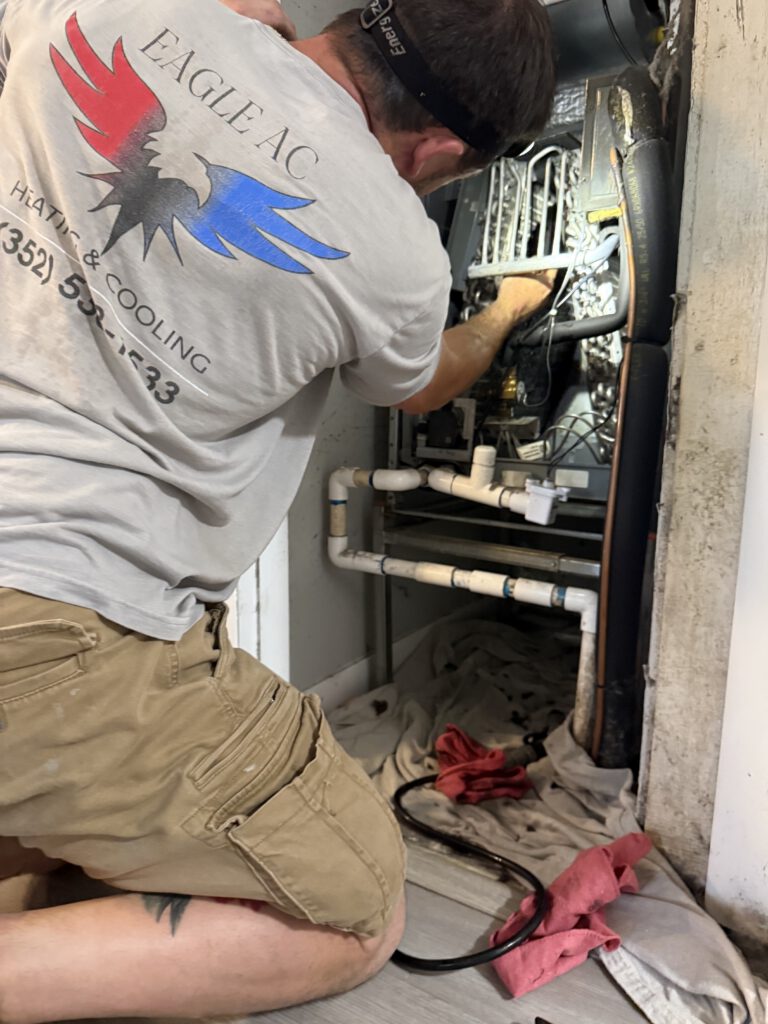
Accessible indoor coils and the blower, which moves air through your system, also need inspection. Dirt on the indoor coil can interfere with heat transfer and moisture removal. Florida guidance identifies indoor coil buildup as a common source of poor efficiency.
The distinction is inspection versus cleaning. Removing a blower assembly or performing deeper coil cleaning may require separate approval and pricing.
Uneven temperatures also deserve context. A hot back bedroom in an older Gainesville home could involve duct leakage, insulation, or sizing, not just a dirty filter. Detailed airflow testing, duct sealing, and duct modifications may fall outside routine maintenance.
Checking your outdoor unit and electrical components
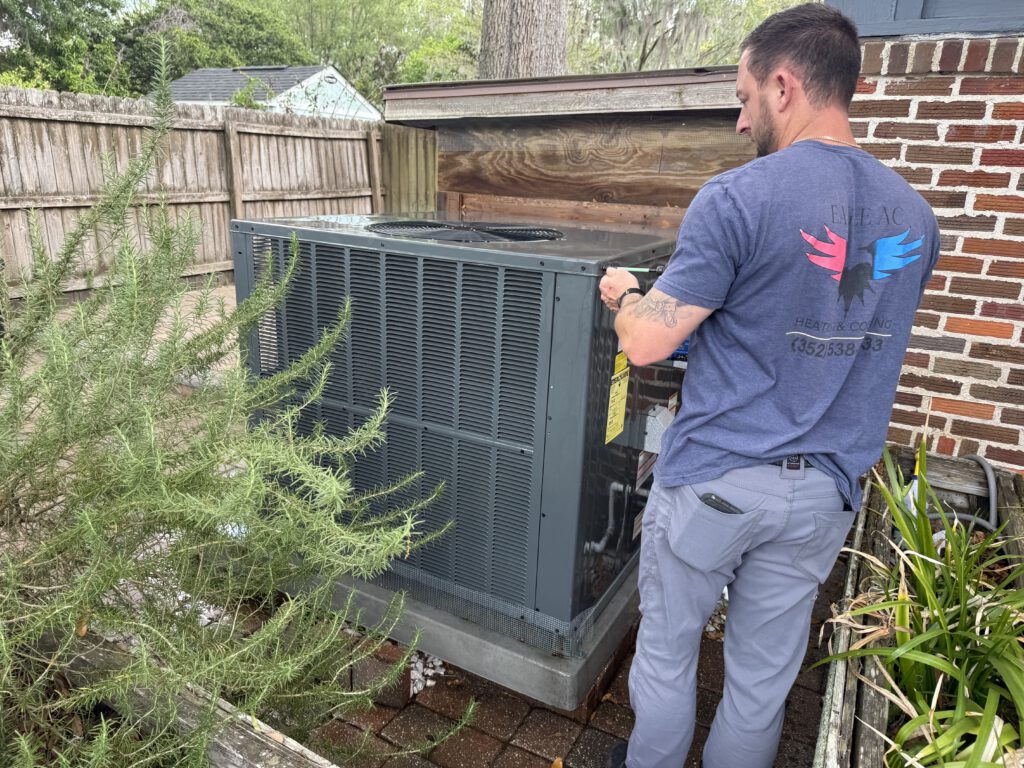
Your outdoor inspection should address accumulated debris, coil condition, fan operation, and visible wiring concerns. Appropriate cleaning helps air move across the coil, but the method should suit your equipment rather than risk damage from aggressive washing.
Depending on the package, operating checks may include electrical readings and tests of components such as capacitors and contactors. A capacitor helps a motor start or run; a contactor switches power to major equipment.
Electrical testing belongs with a qualified technician. Your service summary should identify what was tested and whether any finding points to an immediate fault or a developing concern.
Checking drainage, cooling performance, and humidity concerns
Your condensate drain carries away water removed from indoor air. In Florida humidity, that drainage system gets plenty of use. The visit should address visible drain condition and any installed overflow safety switch, which can shut equipment down when water backs up.
A basic drain check is not necessarily the same as clearing a blockage. Confirm whether flushing or clearing is included, along with any separate charge for an existing backup.
Cooling assessment should go beyond feeling air at a vent. Temperature readings, indoor humidity, airflow observations, and other measurements appropriate to your equipment help establish how the system is performing. No single temperature reading proves everything is working correctly.
Low refrigerant calls for diagnosis, not an automatic “top-off.” Refrigerant circulates in a closed system rather than getting used up like fuel. An incorrect charge can reflect a leak or earlier servicing problem, and adding refrigerant alone does not establish that the cause has been fixed.
What you should get before the visit ends
Your service summary should show what was inspected, what was cleaned, and what findings were recorded. Photos can help explain a dirty coil, damaged insulation, or worn component. Any limits, such as inaccessible equipment or a test that couldn’t be completed, should be documented too.
Recommendations should separate urgent repairs, developing concerns, and optional improvements. A failed electrical component is not the same decision as an optional thermostat upgrade.
Before approving work, request a demonstration of the problem and an explanation of what could happen if repair waits. Written findings make that conversation clearer and give you something useful to compare with a repair or replacement estimate.
A tune-up cannot guarantee lower bills or prevent every breakdown. Its value is better information and appropriate upkeep, not a promise that nothing will fail afterward.
What an AC tune-up costs, and what the advertised price leaves out
An advertised price is only useful when you know what it buys. Your quote can change with system count, equipment type, access, condition, and the amount of cleaning or testing included.
An accessible split system in a newer Newberry subdivision presents different service needs from equipment tucked into a tight space in an older home. Light-commercial rooftop equipment can introduce access and scheduling requirements too.
Compare total scope and cost rather than the lowest headline. Confirm whether diagnostic work, replacement filters, deeper cleaning, drain clearing, parts, and refrigerant work cost extra. Also establish whether a diagnostic fee applies if a tune-up reveals a problem requiring further testing.
At the lower-cost end, a limited inspection can still be useful if the exclusions are clear. A higher-priced visit earns its price through meaningful cleaning, operating checks, and documentation, not a longer checklist filled with vague items. Repair work should receive a separate written quote before approval.
Is a maintenance plan worth it for your property?
Compare a one-time visit with a plan using the annual cost, included visits, and coverage per system. Then account for repair discounts, reminders, scheduling benefits, renewal terms, and cancellation rules. A home with separate upstairs and downstairs systems may need different coverage from a single-system property.
Priority scheduling does not automatically guarantee same-day service. Check the actual terms rather than assuming “priority” means an immediate appointment during peak summer demand.
For a fuller comparison, review how recurring service coverage adds up. Ask Eagle AC for the current Eagle Care Plan maintenance plan details and confirm eligibility for your equipment, particularly for light-commercial systems.
Check your manufacturer’s warranty requirements separately. Maintenance requirements vary, so keep service records without assuming every warranty has identical rules.
When to schedule your visit, and how to get ready
Schedule annual cooling maintenance before Gainesville’s heavier spring and summer demand. Florida cooling rarely follows a neat seasonal shutdown, so book ahead rather than waiting for the first afternoon when indoor temperatures start climbing.
Your heat pump may benefit from attention to both cooling and heating operation. Equipment serving a busy storefront, office, or rental may need a different schedule based on runtime, filter loading, and manufacturer guidance.
Confirm service to your exact address in Gainesville, Newberry, High Springs, or Alachua. Coverage boundaries, access arrangements, and appointment availability can matter more than distance alone.
Before arrival, clear access to your thermostat, indoor equipment, outdoor unit, and electrical disconnect. Secure pets and gather your filter size, approximate system age, repair history, and recent utility bills. For a business, arrange access without blocking customers or staff.
Ask for the expected visit length when booking. Equipment condition, accessibility, and agreed services make a universal time promise unreliable.
How to decide between a repair and a replacement
Tune-up findings should support your next decision, not automatically turn a maintenance appointment into a replacement pitch.
Compare repair cost, recurring trouble, comfort, humidity control, remaining warranty coverage, and your ownership plans. Equipment age belongs in that discussion, but age alone is not a verdict. A newer builder-grade system can have an isolated repair need, while an older system can remain serviceable.
Use a practical framework: establish what failed, what restoring operation will cost, and whether the rest of the system can still meet your needs. Then compare that repair with a complete installed replacement estimate.
When fixing your current system makes sense
Repair usually makes sense when the fault is isolated, the remaining equipment is sound, parts are available, and the work can restore dependable operation at a reasonable cost. A failed capacitor and a failing compressor are very different purchase decisions.
Get a written diagnosis and repair estimate before approving work. Confirm whether applicable parts coverage has been checked and what labor or related charges remain.
High bills alone do not prove your equipment needs replacing. HVAC can account for more than 40% of a typical Florida home’s utility bill, but duct leaks, insulation, windows, thermostat settings, and weather also affect energy use.
A replacement won’t automatically fix those other problems.
When to request a free replacement estimate
Request a free replacement estimate when failures keep returning, a major-component repair is expensive, or persistent comfort problems remain after diagnosis. Aging equipment with limited remaining value deserves comparison with a new system, but no single repair-cost percentage should make the decision for you.
Your replacement should be sized using a cooling-load calculation, such as residential Manual J, rather than square footage alone. That calculation accounts for factors including insulation, windows, orientation, and air leakage. Light-commercial properties need a load assessment appropriate to the space and use.
Gainesville humidity makes sizing especially important. Oversized equipment can cool rooms quickly and shut off before removing enough moisture. Florida guidance emphasizes that proper equipment sizing and duct performance matter alongside efficiency ratings.
Compare installation scope, duct needs, humidity control, warranties, and total installed price. If you’re reconsidering equipment type, understanding how cooling-only and heat-pump systems differ can help you evaluate the estimate.
Before you book, ask for the checklist
A clear scope is more useful than an impressive-sounding “precision tune-up.” Before booking, use this short checklist:
- Verify Florida contractor licensing and insurance.
- Confirm service to your exact address.
- Request written inclusions and exclusions.
- Confirm how extra work gets approved.
- Ask what service documentation you receive.
For refrigerant work, confirm appropriate certification as well. Your appointment should end with understandable findings, not pressure to approve unexplained extras.
Frequently asked questions
How often should you schedule an AC tune-up in gainesville?
Schedule professional cooling maintenance annually, preferably before heavier spring and summer demand. Your heat pump or light-commercial equipment may need a different schedule based on use and manufacturer guidance. Check filters monthly during peak cooling season or as directed by the manufacturer.
Does a tune-up include refrigerant?
Don’t assume refrigerant or refrigerant-related repairs are included. Confirm how the visit assesses system operation and when additional testing costs apply. If the charge is low, get a diagnosis rather than treating repeated additions as routine maintenance.
Can a tune-up fix a house that feels cool but damp?
Maintenance can uncover dirty coils, airflow restrictions, or operating problems that affect moisture removal. Persistent dampness can also involve oversized equipment, duct leakage, or building conditions. Describe the humidity complaint when booking so the visit addresses more than thermostat temperature.
Is a tune-up worth booking if your AC is already old?
A maintenance visit can clarify equipment condition, provided your system is operating without symptoms requiring diagnosis. Age alone does not determine value. Use the findings to compare continued upkeep, necessary repairs, and a replacement estimate.
Can you get same-day service instead of waiting for maintenance?
If cooling has failed, request a diagnostic or repair appointment and ask about same-day availability. Scheduling depends on demand and access. Describe warm air, shutdowns, leaks, ice, or unusual smells at booking so the appointment matches the problem.
Start with your main symptom. Call Eagle AC or book service online to check same-day repair availability, request a free replacement estimate, or get Eagle Care Plan maintenance plan details.